TLDR
impact.com is the strongest all-in-one partnership platform for brands that can staff it, and a solid but sometimes frustrating network for publishers.
- What it is: A partnership management platform for tracking, contracting, and paying affiliates, creators, and referral partners, plus a marketplace where publishers find programs
- Who it's for: Brands with a dedicated partnerships person, and publishers who want access to well-known advertisers
- Top strengths: Accurate tracking, deep custom reporting, a large marketplace of established brands, low $10 payout minimum
- Biggest limitation: Steep learning curve, a 2.5% fee on top of the subscription, and recurring publisher complaints about frozen balances and slow support
- Quick verdict: Worth it for brands spending real money on partnerships and for publishers who diversify across networks. Not the place to park all your income.
If you've spent any time in affiliate marketing, you've logged into impact.com. It's where a huge share of the brands you actually want to promote run their programs, and after its April 2026 alliance with Rakuten, that footprint is only getting bigger. For brands, it promises one dashboard for every partner type. For publishers, it promises access to advertisers that won't touch smaller networks.
The question is whether that promise holds up once you're inside. Scroll through G2 and impact.com looks like a polished enterprise tool with happy customers. Scroll through Trustpilot and it looks like a place where commissions go to disappear. Both pictures are real, and which one you live in depends heavily on which side of the platform you're on and how you use it.
What impact.com Actually Is
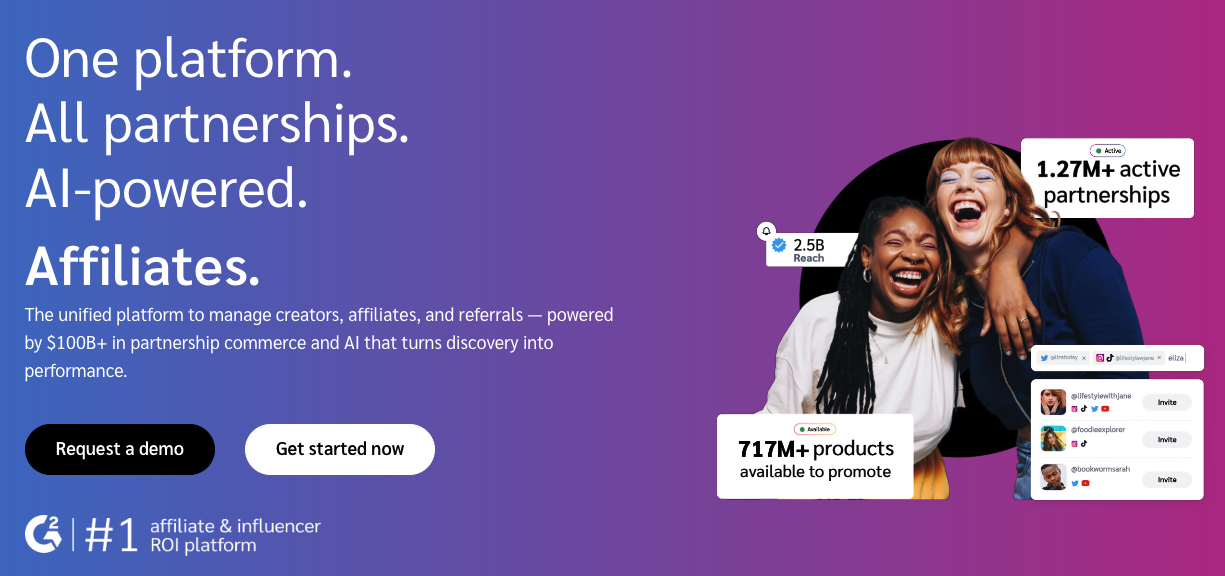
impact.com started in 2008 in Santa Barbara as Impact Radius and has grown from an affiliate tracking tool into what it now calls a partnership management platform. That's not just a rebrand. The platform is built around modules for recruiting partners, writing contracts, tracking conversions, paying out, monitoring for fraud, and optimizing results, across three partnership types: performance (classic affiliate), creator, and advocate (customer referrals).
The practical difference from an old-school network like ShareASale or CJ is that impact.com behaves more like software a brand licenses than a network a brand joins. Each brand sets its own contract terms, locking periods, and payout schedules. That flexibility is the whole appeal for advertisers, and it's also why publisher experiences vary so much from one program to the next.

The Rakuten alliance
In late April 2026, Rakuten and impact.com announced a strategic alliance that pairs Rakuten Advertising's managed services and partner relationships with impact.com's infrastructure for contracting, tracking, and payments. impact.com says it powers programs for more than 5,000 brands, and the deal effectively makes it the technology layer for a big chunk of the affiliate industry.
For publishers, the near-term takeaway is simple: more of the programs you care about are likely to end up running through impact.com, so learning the platform is less optional than it used to be. For brands, it opens access to Rakuten's managed services without a separate commercial relationship.
Pricing for Brands
For years, impact.com pricing was a demo-only mystery. It now publishes tiered starting prices, and third-party trackers consistently report four plans. Starter begins around $30 per month, Essentials around $500, Pro around $2,500, and Enterprise is custom-quoted. Essentials is where marketplace access kicks in, which impact.com describes as reach into roughly 90,000 partners.
The sticker price isn't the full bill. impact.com charges a 2.5% fee on commissions processed through the platform, and buyers report setup fees, integration work, and annual contracts that auto-renew. Starter is offered month-to-month for Shopify merchants, but most serious programs end up on annual terms. Pricing trackers also note that list prices are negotiable, so don't sign the first quote.
Is it worth the money?
For a brand running a real program with a person managing it, the math usually works. The tracking is precise, the attribution is flexible, and the contract and payment automation saves hours every month. An impact.com-commissioned Forrester study claimed a 314% ROI for a composite customer, which is a vendor-funded number, but it lines up with what satisfied brand users describe.
For a small store testing affiliate for the first time, the picture is murkier. Some small merchants on the Shopify app store say they signed up expecting hands-on strategy help and instead found themselves fielding agency pitches. If nobody on your team will own the program, $500 a month plus fees buys a lot of unused dashboard.
The Publisher Experience
Joining impact.com as a publisher is free. You apply to the marketplace, browse brands, and request to partner with each one individually. Approval is brand by brand, and smaller sites frequently report getting declined by big-name advertisers with little explanation. That's partly by design, since brands control who they work with, but it can feel opaque.
Once you're approved, the day-to-day is better than the platform's reputation suggests. Link generation is quick, reporting is detailed, and the mobile app is genuinely useful for checking performance on the go. G2 reviewers on the publisher side regularly point to the quality of brands in the marketplace as the main reason they stay.
How payouts work
impact.com's payout system is more complex than most networks, and understanding it heads off a lot of frustration. Every sale starts as a pending action. Each brand sets an action locking period during which it can modify or reverse the commission, and only after that does the payout scheduling period begin. Then impact.com checks that the brand has funded its account before releasing your money.
The upside is a low $10 minimum withdrawal to a bank account or PayPal, with a choice of balance-threshold payouts or fixed-date payouts on the 1st or 15th. The downside is that your cash flow depends on every brand funding on time. impact.com's own help docs list under-funded brand accounts as a common reason payouts are late, and they warn against fixed-date payouts if you work with multiple brands for exactly that reason.
Where impact.com Shines
Tracking accuracy and reporting are the most consistent points of praise across user reviews. On G2, where impact.com has more than 2,000 reviews, affiliate tracking and custom reporting both score near the top of the category. Brand users like being able to see how multiple partners touch a single customer journey, and publishers like that clicks and sales tend to get credited properly.
The marketplace is the other big win. Publishers repeatedly say the brands on impact.com feel more established and more likely to convert than what they find on smaller networks. And for brands, the ability to run affiliates, creators, and referral programs in one place, rather than juggling three tools, is a real operational advantage once it's set up.
Fraud and compliance tools
impact.com has invested heavily in monitoring, and it has shown a willingness to act. In January 2026 it suspended Honey from its marketplace following an investigation into attribution manipulation, shortly after Rakuten Advertising cut Honey from its own network. For content publishers who've watched browser extensions swipe last-click credit, that's a meaningful signal.
The flip side is that aggressive compliance sometimes catches legitimate publishers. A tighter system protects brands and honest affiliates, but it also raises the stakes when an account gets flagged by mistake.
Where It Falls Short
The learning curve is real. "Difficult learning" and "poor UI" both show up as recurring tags in G2 reviews, and comparison sites note that onboarding is rough for teams without dedicated partnership operations. Expect to spend real time in the help center before the platform feels natural.
The harder issue is how publishers describe problems when something goes wrong. On Trustpilot and the BBB, the recurring complaints are account restrictions without clear explanation, frozen balances, brands paying late, and support that redirects publishers back to the brand. Some reviewers report balances in the thousands held for months. impact.com responds to many of these publicly, but the pattern is consistent enough that it's worth taking seriously, and several independent reviewers note that support is noticeably better for paying brands than for free publisher accounts.
Reading the review split
It helps to understand why impact.com's reputation looks so split. Brand users pay for the platform, get dedicated support, and mostly review it on software sites like G2 and Capterra, where scores are strong. Publishers use it for free, deal with brand-controlled terms, and tend to review it on consumer sites like Trustpilot when something breaks.
Neither group is wrong. The platform does what brands pay it to do very well. What it doesn't do as well is act as an advocate for publishers when a brand reverses commissions, pays late, or ends a contract, because in impact.com's model, the brand sets the rules.
Who Should Use impact.com
Brands that should seriously consider it include DTC and ecommerce companies with an established affiliate channel, businesses running creators and affiliates side by side, and anyone already working with Rakuten Advertising. If you have at least one person whose job includes managing partners, impact.com is likely the most capable option in the category.
Publishers should join if they want access to major advertisers, which at this point most do. The smart move is to treat impact.com as one income stream among several, keep your tax and banking details current, withdraw on a balance threshold rather than a fixed date, and read each brand's locking period before you start sending traffic.
Who should look elsewhere
Small brands without anyone to run the program will likely get more value from a simpler, cheaper tool or an all-in-one network with built-in publisher recruitment. B2B SaaS companies focused on resellers and referral partners may find PartnerStack a more natural fit.
Publishers who depend on a single brand or need predictable weekly cash flow should be cautious. Because payout timing is tied to each brand's funding, a single slow-paying advertiser can hold up money you've already earned.
Bottom Line
impact.com earns its spot as the default platform for serious affiliate and partnership programs. The tracking is accurate, the reporting is deep, and the marketplace has the brands publishers actually want. After the Rakuten alliance, its role as industry infrastructure is only growing, which makes it hard to avoid on either side of the business.
The caveats are about control and support, not capability. Brands pay a subscription plus a 2.5% fee and need someone to run the program. Publishers get access for free but live under brand-set terms, with payouts that depend on brands funding on time and support that can be slow when things go sideways. Use it, but diversify. Have you had a payout or approval experience on impact.com that changed how you use it?
Visit
Impact.com Review 
